Not a course. Not coaching. A Go-To-Market Operating System — an execution layer that runs your entire GTM through AI.
"I don't understand how I worked without it."
Tekla, Founder, The Mindfulness App
This isn't theory. These are real results.
This is what changes when AI actually knows your business.
"I'm using it like all the time. I don't understand how I worked without it."
"I'm definitely very confident in the output. I think this will just work straight away."
"I built this because I needed it. Now it runs Fload's entire go-to-market."
GTM OS runs through Claude — an AI you talk to like a colleague. No coding. No dashboards. No AI experience needed. Just conversation.
You get a folder. Drop it into Claude. That's the setup.
The system asks about your company, your customers, your goals. Talk to it like a colleague, voice or text.
Already have a pitch deck or content plan? Upload it. The system reads everything and skips the questions.
Pick a system. Creator outreach? Content engine? Outbound emails? Everything generated, personalised, in your voice, ready to send.
I've run growth at Revolut as a first hire, across 40 mobile apps, and now at Fload, an AI company I took to market in under two months, alone.
I know what it's like to have every strategy in your head and not enough hours to execute any of them properly. I've scrolled Twitter at 2am saving frameworks I'll never use. I've forgotten insights from partnership calls. I've let follow-ups go cold. I've stared at a blank screen knowing I should be scraping creators for TikTok and Meta ads, writing outreach sequences, growth hacking on Reddit and Twitter, monitoring ad performance, and building lead lists. All at the same time.
And on top of all of that, you're also meant to be tracking the numbers behind every single channel. CAC, LTV, cost per install, cost per lead, conversion rates, ad spend vs. return. Not just doing the work, but measuring whether the work is even working. Budgeting it all. Reporting on it all.
The anxiety wasn't about not knowing what to do. It was knowing exactly what to do and not having the bandwidth to do it all. The paralysis of trying to operate across that many growth levers at once: content, outbound, partnerships, pipeline, competitive intel, performance tracking. It breaks you.
So I built the system I wished existed.
GTM OS lets me park everything I need to do in one place. It remembers the partnership calls. It captures the insights. It finds the creators. It drafts the content. It monitors the ad performance and the organic posts. It tracks the metrics I used to lose in spreadsheets. It reminds me what's urgent before I have to think about it. I don't carry it all in my head anymore.
I went from being a slave to growth admin to being the orchestrator of it. My job now is to think of the next move. Not to remember all the ones I'm already supposed to be making.
That's what this system gave me.
That's what I built it to give you.
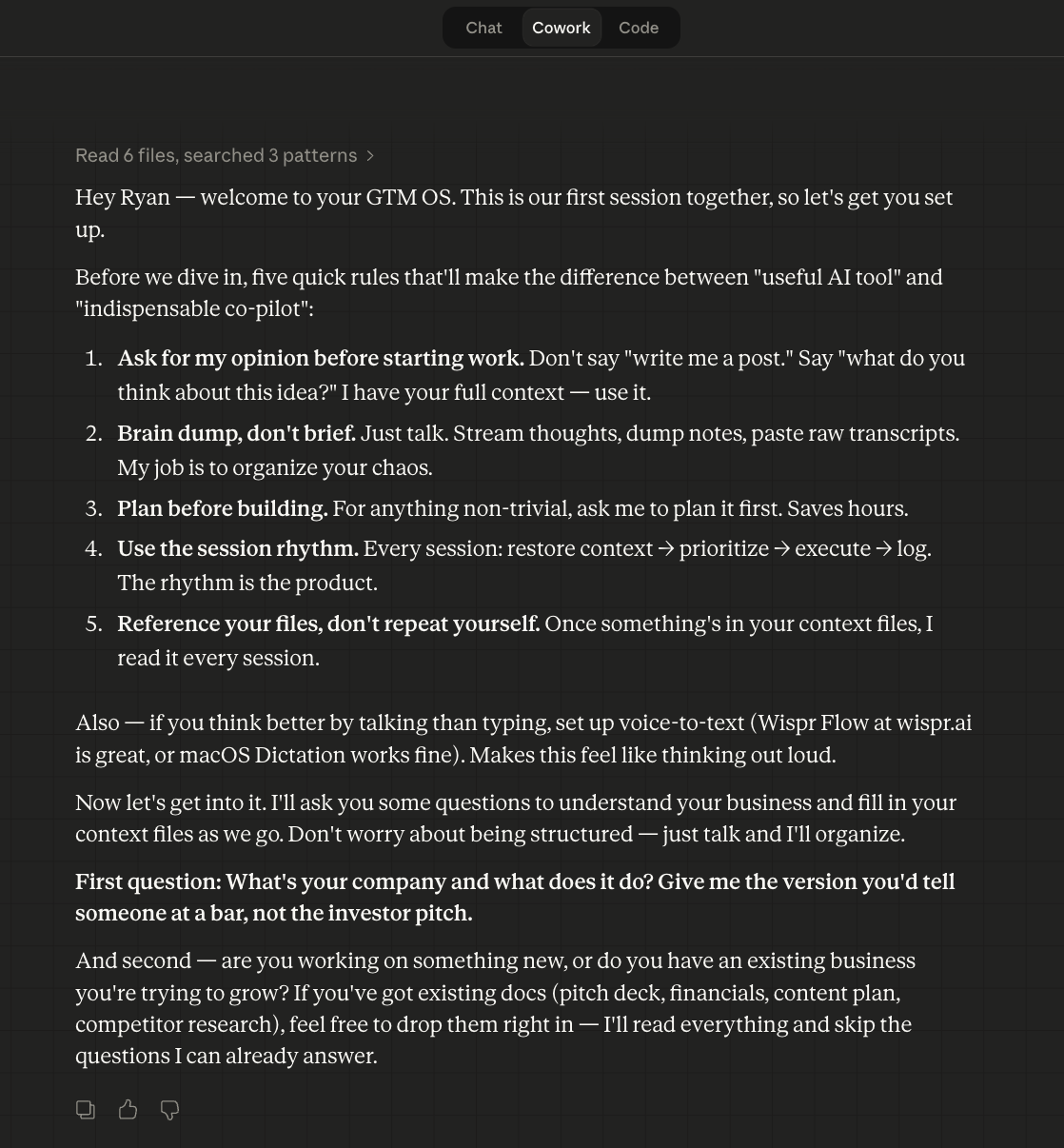
19 interconnected systems across three layers. Adapts to your voice, your tone, and how you like to work. Every session builds on the last.
Your context: company profile, ICPs, positioning, brand voice, proof points. Gets smarter every session.
Campaigns you deploy: outreach, content, lead discovery, competitor intel, partnership engines, and more.
Always-on intelligence that compounds: CRM, content performance, customer intel, market sensing.
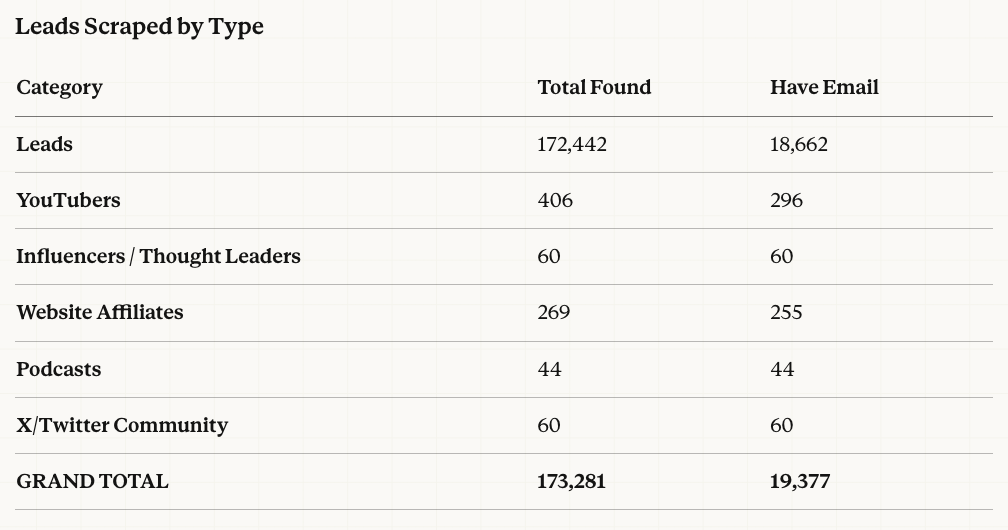
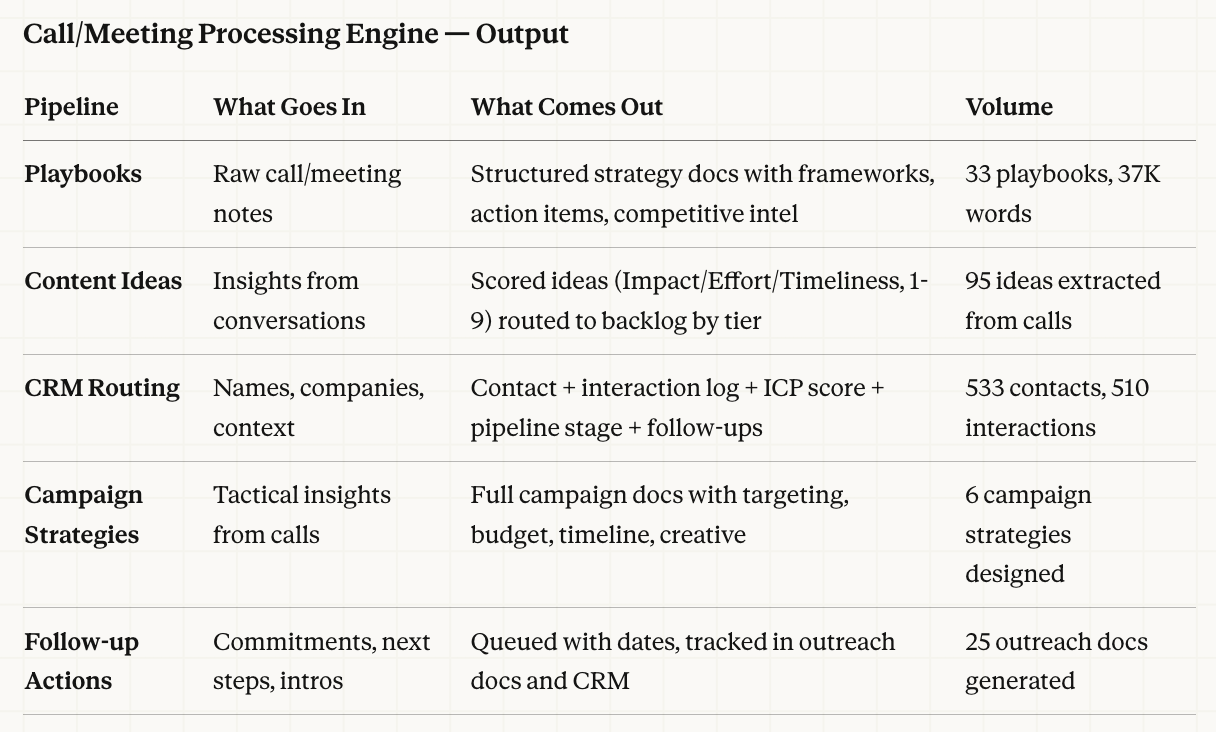
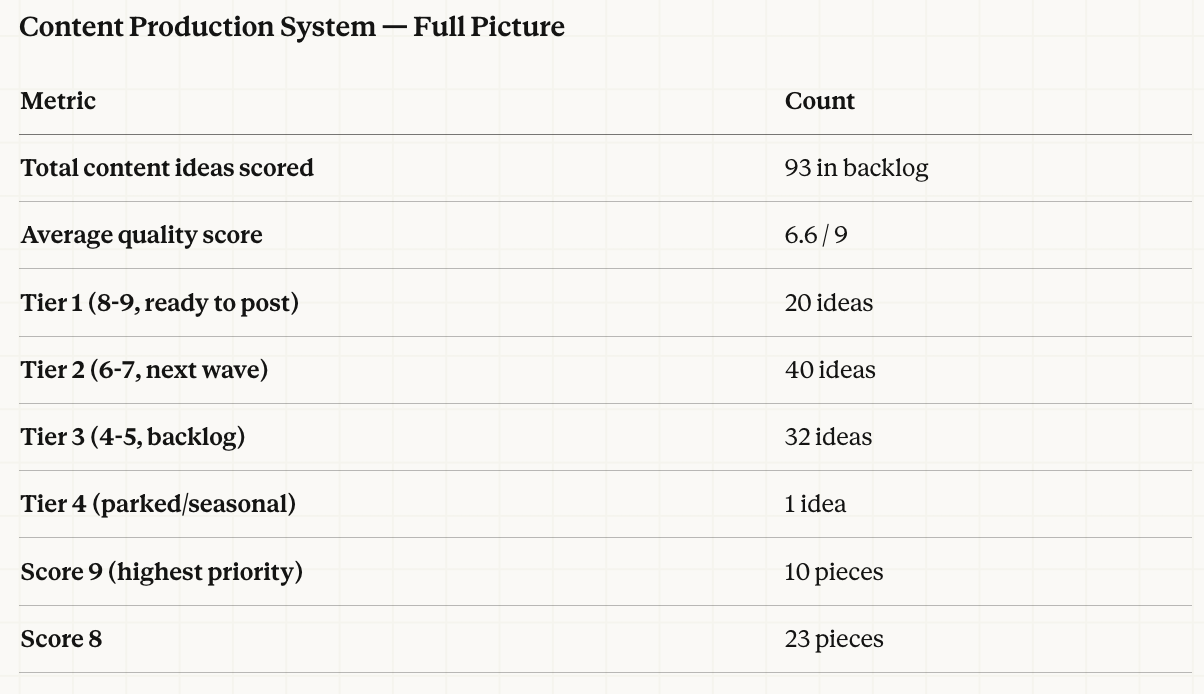
These aren't mockups. These are real screenshots from real systems running on a real business.
GTM OS adapts to your business model. The architecture is the same. The systems it prioritises are different.
Build systems scrape prospects, enrich contacts, and send outreach that references their actual product, funding stage, or tech stack.
CRM flywheel surfaces stale deals, overdue follow-ups, and warm signals. Every conversation gets logged. Nothing falls through.
Transcript engine turns customer calls into LinkedIn posts, case study seeds, and objection-handling content.
Track competitors' pricing changes, industry regulations, buyer sentiment shifts. Make decisions on live data, not assumptions.
Common B2B use cases:
SaaS Dev Tools Agency Consulting B2B Services Enterprise Sales MarketplacesFind YouTubers, newsletter sponsors, podcast hosts, and affiliate partners who reach your audience. Personalise every pitch.
Content performance flywheel tracks what's working, surfaces winning formats, and keeps your posting consistent.
Map communities where your users hang out. Plan value-first entry strategies. Track which channels drive real signups.
Stay on top of algorithm changes, ad creative trends, ASO shifts, and emerging distribution channels before your competitors.
Common B2C use cases:
Mobile Apps E-commerce Consumer SaaS D2C Brands Content Creators Gaming Health & FitnessThis isn't a course you study. It's a system that starts working immediately and compounds from there.
Open GTM OS in Claude. It asks about your business, products, customers. You talk naturally, or drop existing docs. The context system builds itself.
Ask it to write LinkedIn posts, outbound DMs, or a launch plan. Everything comes back grounded in your actual business, not generic templates.
Every session starts with a briefing. It knows your pipeline, what content went out, what's pending. You just say "what should I focus on today?" and get a real answer.
Session logs and performance data feed back into every output. It references what got engagement, what converted, what flopped. Advice gets sharper.
Content engine running. Outbound sequences going out. Pipeline tracked. Community growing. All connected through one system that remembers everything.
Claude Pro ($20/mo). That's it. No other subscriptions, no setup, no integrations required to start. Add tools as you scale. No coding. You talk to it, it talks back.
Instant download. No subscription required. Works with Claude Pro ($20/mo).
Stuck? I'm just a message away. Every early buyer gets personal onboarding help from the founder.
$149. All 19 systems. Onboarding included.
Get GTM OS - $149